Untangling the Past: How Legacy Cable Infrastructure Is Costing Your Business More Than You Realize

Photo by Photo by Albert Stoynov on Unsplash on Unsplash
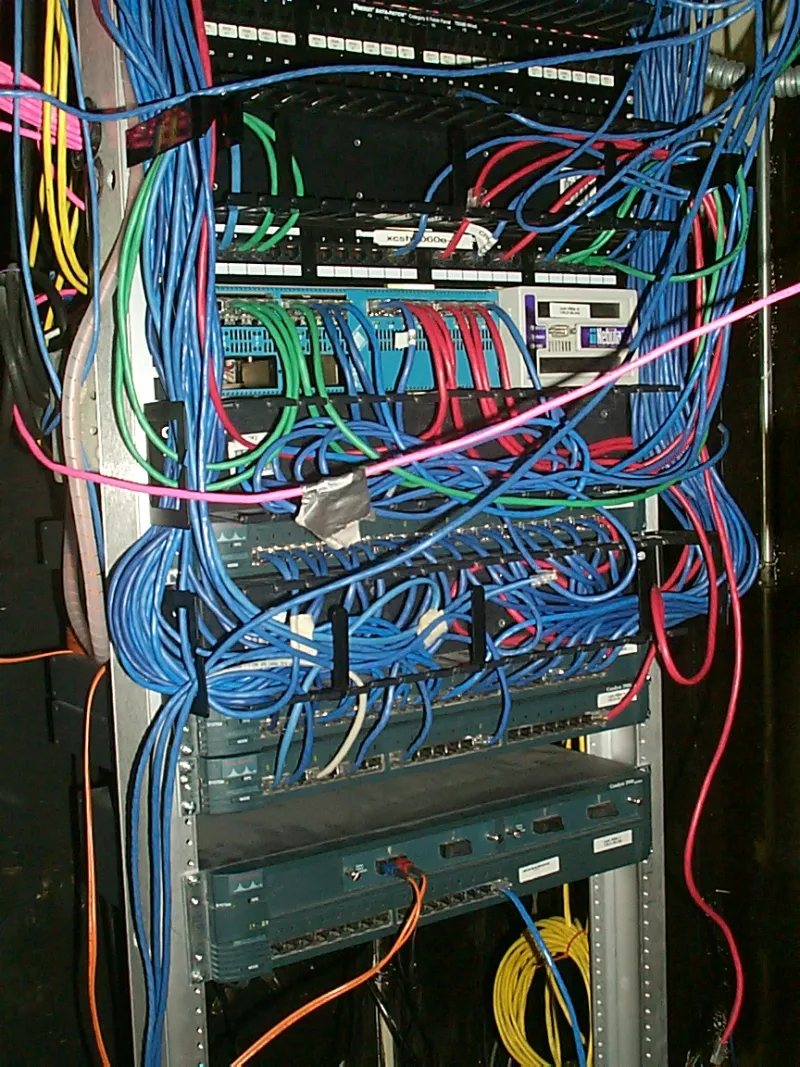
Walk into the server room of almost any mid-sized American business that has operated for more than a decade, and you will likely encounter the same scene: coiled bundles of unidentified cables zip-tied to racks, cardboard boxes filled with VGA adapters and serial connectors, and drawer upon drawer of USB-A hubs, PS/2 keyboards, and parallel port dongles that nobody has touched since the Obama administration. It is a phenomenon so common that IT professionals have coined an informal name for it — the cable graveyard.
What separates the cable graveyard from ordinary clutter is that it carries a measurable cost. That cost manifests not just in physical space, but in procurement inefficiency, technician time, compliance exposure, and organizational inertia. For IT leaders who have long treated legacy connectivity as a low-priority nuisance, the numbers may prompt a reconsideration.
How the Accumulation Happens
Connectivity sprawl rarely results from negligence. It is, in most cases, the byproduct of rational short-term decisions made over many years. When a company upgrades its workstations, the old cables get boxed up rather than discarded — because someone might need them. When a vendor ships equipment with proprietary cabling, that cabling stays in inventory long after the equipment is retired. When office relocations occur, entire cable collections migrate from one location to the next without audit.
The result is a layered archaeological record of connectivity standards: VGA and DVI coexisting with DisplayPort and HDMI, CAT5 tangled alongside CAT6 and CAT6A, RS-232 serial cables sharing shelf space with USB-C docking station accessories. Each layer represents a technology generation that was once current, then redundant, then obsolete — but never fully decommissioned.
This pattern is especially pronounced in organizations that have grown through acquisition. When two companies merge their IT environments, their cable inventories merge as well, and the combined total is almost never rationalized before it is consolidated into a single facility.
The Real Cost of Doing Nothing
The most immediate and quantifiable cost of cable sprawl is technician time. When a help desk professional spends fifteen minutes searching through bins of unlabeled cables to locate the correct adapter for a conference room display, that time has a dollar value. Multiply that across a team of five technicians, each encountering similar friction two or three times per week, and the annual labor cost of poor cable organization becomes significant.
Beyond labor, there is the procurement redundancy problem. Organizations that lack accurate cable inventories routinely purchase new cables and adapters that they already own in quantity. Without a catalog, procurement decisions default to buying new rather than locating existing stock. IT managers at mid-market firms frequently report discovering dozens of unopened cable packages during office cleanouts — purchases made because the inventory was invisible.
Data center environments introduce an additional dimension: airflow and cooling efficiency. Dense, unmanaged cable runs obstruct airflow between rack units, forcing cooling systems to work harder to maintain safe operating temperatures. In facilities where power and cooling costs are already a budget pressure, cable-induced airflow restriction is a compounding expense that rarely appears on a root-cause analysis.
There is also a compliance angle that is easy to overlook. In regulated industries — healthcare, finance, and federal contracting among them — physical infrastructure documentation is not optional. Organizations subject to frameworks such as HIPAA, SOC 2, or FedRAMP may find that undocumented cabling in production environments creates audit findings. The cost of remediating a compliance gap discovered during an external audit is typically far greater than the cost of proactive documentation.
Building a Cable Audit Framework
For IT leaders ready to address legacy connectivity systematically, the starting point is an honest inventory. This does not require an enterprise asset management platform, though such tools help. It requires a structured methodology applied consistently across every physical space where IT infrastructure exists.
A practical audit framework proceeds in three phases. The first phase is discovery: physically walking every space — server rooms, wiring closets, storage areas, individual workstations, and conference rooms — and cataloging every cable and connector present. The catalog should capture cable type, approximate length, current connection status (in use, stored, or unidentified), and physical condition.
The second phase is classification. Each cataloged item should be assigned to one of four categories: active and required, spare and viable, obsolete and disposable, or unknown and requiring investigation. This classification step is where legacy standards become visible in aggregate. Seeing thirty VGA cables listed as "obsolete and disposable" in a single spreadsheet makes the decommissioning decision straightforward in a way that individual encounters with those cables never do.
The third phase is disposition. Active cables get labeled and organized. Viable spares are consolidated into a managed inventory with par levels. Obsolete items are scheduled for disposal through certified e-waste recyclers — a step that is both environmentally responsible and, in many states, legally required for certain connector types that contain regulated materials. Unknown items are investigated before any irreversible action is taken.
Decommissioning Without Disruption
The concern most commonly raised when cable cleanup initiatives are proposed is operational risk. IT teams worry that decommissioning a cable that appears unused will trigger an unexpected outage somewhere downstream. This concern is legitimate, and it argues for a measured approach rather than a moratorium on action.
The most reliable risk mitigation strategy is the staged decommission. Rather than immediately disposing of cables identified as obsolete, they are first moved to a quarantine inventory — physically separated from active infrastructure but retained for a defined period, typically sixty to ninety days. If no operational issue surfaces during the quarantine window, the items proceed to disposal. This approach captures most of the organizational benefit of decommissioning while preserving a recovery path for the rare case where a cable's function was misidentified.
For data center environments specifically, cable management upgrades should be coordinated with scheduled maintenance windows. Replacing unmanaged cable runs with properly routed, labeled, and documented infrastructure is not a task that can be safely performed around live production systems without planning. Organizations that treat cable remediation as a legitimate project — with scope, timeline, and budget — consistently achieve better outcomes than those that attempt to address it incrementally during off-hours.
Making the Case to Leadership
For IT managers who need to justify a cable remediation initiative to finance or operations leadership, the argument is most effective when framed in terms of recoverable cost rather than aesthetic improvement. Quantify the technician hours currently lost to cable-related friction. Document the procurement redundancy your team has observed. If your facility has experienced cooling inefficiency, request a thermal audit that can attribute a portion of that cost to cable obstruction.
The cable graveyard is not a glamorous IT problem. It does not generate headlines the way cybersecurity incidents or cloud migration projects do. But for the organizations willing to treat it as the operational and financial issue it genuinely is, the return on a structured remediation effort is both measurable and durable. Clean infrastructure is faster to maintain, cheaper to operate, and easier to document — and in an environment where IT teams are consistently asked to do more with less, those advantages compound over time.