Idle by Design: The Memory Overconfiguration Problem Quietly Inflating Your IT Budget
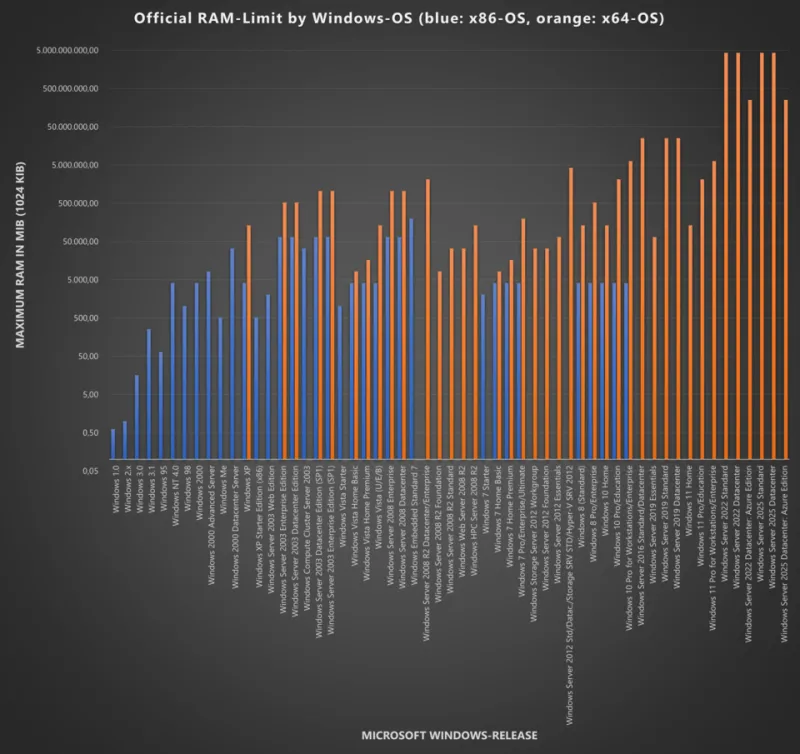
Photo: PantheraLeo1359531, CC0, via Wikimedia Commons
There is a particular kind of waste that thrives precisely because it is invisible. It does not trigger alerts. It does not show up on a service desk ticket. It simply sits there, consuming capital that was allocated during a procurement cycle months or years ago, never questioned because the machines in question technically work fine.
That is the nature of RAM overconfiguration — and for mid-market and enterprise organizations operating fleets of dozens to thousands of workstations, it represents a material budget leak that most IT departments have never bothered to measure.
How Overconfiguration Becomes the Default
The logic behind specifying generous memory allocations is, on its face, reasonable. Procurement teams and IT architects build hardware standards around worst-case scenarios. They account for the power user who runs multiple virtual machines simultaneously, the analyst who keeps twenty browser tabs open alongside a data visualization suite, the designer rendering large files on deadline.
The problem is that those edge cases often define the standard configuration applied to everyone — including the accounts payable clerk whose daily workload consists of a spreadsheet, an email client, and an ERP portal. The result is a fleet of workstations where a significant portion of installed RAM is functionally decorative.
Vendor incentive structures compound the issue. Upselling from 16GB to 32GB at the point of procurement costs relatively little in the context of a full system purchase, and sales representatives are rarely discouraged from recommending the higher tier. IT managers, conscious of being blamed for future performance complaints, tend to accept the upgrade. No one in that conversation is asking what the utilization data actually suggests.
What the Numbers Look Like in Practice
While utilization profiles vary by industry and role, internal audits conducted by IT consultancies and enterprise asset management firms consistently surface the same pattern: a meaningful percentage of workstations in mixed-role environments operate at average RAM utilization rates well below 50 percent during standard business hours.
For a fleet of 500 workstations each configured with 32GB of RAM where 16GB would have sufficed, the per-unit cost delta — typically ranging from $40 to $80 depending on procurement timing and vendor — translates to between $20,000 and $40,000 in unnecessary spend on that single refresh cycle alone. Multiply that across multiple refresh cycles, or scale it to a larger fleet, and the figure becomes difficult to dismiss as rounding error.
That calculation does not include the downstream costs: higher energy consumption per workstation, increased licensing fees for memory-dependent software tiers in some configurations, and the opportunity cost of capital that could have been directed toward infrastructure with measurable productivity impact.
The Audit Gap
Perhaps the most striking aspect of this problem is how rarely organizations measure it. RAM utilization is not a metric that typically appears on executive dashboards or quarterly IT reviews. Most endpoint management platforms are capable of capturing it, but capturing capability and acting on the data are different things.
Tools such as Microsoft Endpoint Configuration Manager, Lansweeper, NinjaRMM, and SolarWinds provide memory utilization telemetry at the device level. The data is frequently available. What is generally absent is a formal process for reviewing it on any regular cadence, and a defined threshold at which procurement standards are revised in response.
Without that process, organizations tend to carry forward the same specifications cycle after cycle, treating past decisions as validation rather than re-examining whether those decisions still align with actual workload patterns.
Building a Practical Memory Audit Framework
Correcting this requires less technical sophistication than many IT leaders assume. The foundational step is establishing a baseline: pulling average and peak RAM utilization data across the fleet, segmented by role or department, over a representative time window of at least 30 days. Spot measurements taken during off-peak hours or during a single session are not sufficient — utilization data needs to reflect genuine working patterns.
From that baseline, organizations can begin segmenting their workforce into meaningful utilization tiers. Knowledge workers in administrative, customer service, or light office roles will typically fall into a lower tier. Engineers, developers, data analysts, and creative professionals will occupy a higher tier. The goal is not to apply a single memory standard across every workstation, but to align specifications with the actual demands of each role category.
Once those tiers are established, procurement standards can be adjusted accordingly. This does not require pulling existing hardware — the savings materialize at the next refresh cycle. What matters is that the corrected specifications are documented, defended with utilization data, and applied consistently rather than overridden at the point of purchase by well-intentioned but unsubstantiated concerns about future-proofing.
The Future-Proofing Counterargument
The most common objection to rightsizing RAM is the argument that higher memory allocations extend useful workstation life by accommodating future software demands. This argument deserves scrutiny rather than automatic acceptance.
For roles where workloads are stable and well-defined — and many administrative and operational roles qualify — the probability that RAM demand will double within a standard three-to-five-year refresh window is low. Software does become more resource-intensive over time, but the rate of increase for mainstream productivity applications has been gradual rather than dramatic. Organizations that treat this theoretical future demand as justification for present over-provisioning are, in effect, paying a premium today to hedge against a risk that historical data does not strongly support.
For roles where genuine uncertainty exists — emerging technical positions, departments piloting new tooling — a more conservative buffer is warranted. The point is not to eliminate judgment from the procurement process, but to ensure that judgment is informed by evidence rather than reflexive caution.
Rightsizing as a Procurement Discipline
The broader lesson here is about procurement discipline as an ongoing practice rather than a point-in-time event. Hardware specifications that were appropriate three years ago may not reflect current workload realities. The only way to know is to measure.
Organizations that build memory utilization audits into their regular IT review cycles — treating them with the same rigor applied to software license audits or network performance assessments — will consistently make more defensible procurement decisions. They will also be better positioned to push back on vendor recommendations that serve the seller's margin more than the buyer's operational needs.
The RAM sitting idle across your fleet is not a technical problem. It is a process problem. And unlike many infrastructure challenges, it is one where the corrective action is straightforward, the data is already within reach, and the financial return is both measurable and recurring.