Terabytes in the Dark: The Hidden Cost of Over-Provisioned SSDs Across Your Business Fleet
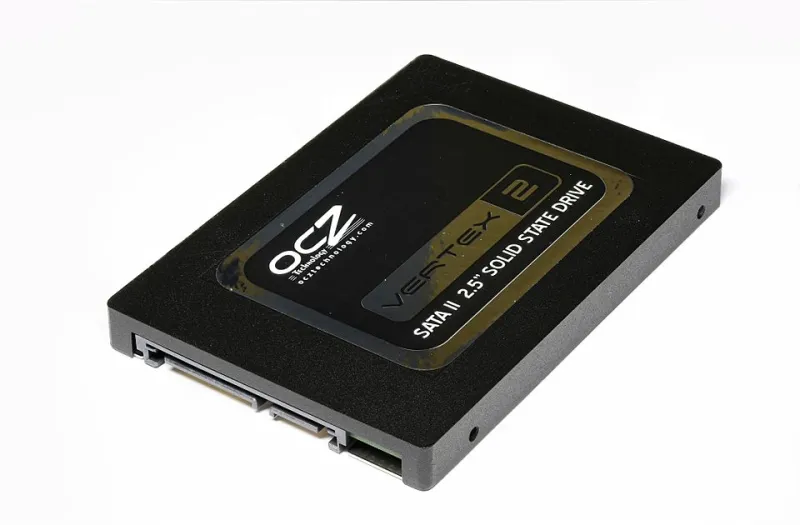
Photo: D-Kuru, CC BY-SA 3.0 at, via Wikimedia Commons
Solid-state drives have become one of the most significant line items in enterprise hardware procurement. They are faster, more durable, and increasingly affordable compared to their mechanical predecessors. Yet affordability has introduced its own problem. As per-gigabyte prices have declined, procurement teams have defaulted to maximum-capacity configurations as a matter of routine, often without examining whether those configurations reflect actual workforce needs. The result is a fleet of business machines carrying terabytes of unused storage that organizations are paying for, managing, and eventually disposing of — without ever extracting meaningful value from the capacity.
This is not a minor inefficiency. Across a fleet of several hundred devices, the cumulative cost of over-specified storage can represent tens of thousands of dollars in unnecessary capital expenditure. For mid-market organizations operating under constrained IT budgets, that figure is worth examining carefully.
How Over-Provisioning Became the Default
The tendency to over-specify storage did not emerge from negligence. It developed from a combination of vendor incentives, procurement convenience, and a broadly reasonable instinct to avoid future upgrade costs. When configuring bulk device orders, procurement teams frequently select the highest available storage tier because the incremental per-unit cost appears modest and the alternative — returning to repurchase or upgrade devices mid-cycle — seems operationally disruptive.
Vendors, for their part, structure their pricing in ways that make upgrades look like minimal investments. The jump from a 512GB configuration to a 1TB configuration on a business-class laptop often costs between $50 and $100 per unit at volume. Across a purchase order for 200 machines, that premium reaches $20,000. If the additional capacity goes largely unused, that sum represents pure waste.
There is also a cultural dimension at play. IT departments have historically been criticized for under-specifying hardware, and the organizational memory of employees hitting storage ceilings on older spinning-disk machines has created a lasting bias toward excess. SSDs are fast enough and compact enough that the physical and performance trade-offs of larger drives are essentially invisible — which makes the over-provisioning habit easy to perpetuate without scrutiny.
What Actual Utilization Data Reveals
When organizations take the time to audit storage utilization across their device fleets, the results are frequently striking. Endpoint management platforms and device telemetry tools consistently show that a substantial portion of business laptops and desktops operate with primary drive utilization well below 40 percent — often far lower for knowledge workers whose files live primarily in cloud environments such as Microsoft 365, Google Workspace, or enterprise platforms like Box and SharePoint.
The modern business workflow has shifted meaningfully toward cloud-first storage architectures. Documents, presentations, spreadsheets, and collaborative assets increasingly reside on remote servers rather than local drives. For roles in finance, marketing, human resources, and general administration, local storage demand is largely limited to the operating system footprint, installed applications, a browser cache, and a modest volume of working files. In these configurations, a 256GB drive frequently provides adequate headroom with room to spare.
The roles that genuinely require expanded local storage are narrower than procurement assumptions typically reflect. Software developers managing large local repositories, video editors working with high-resolution footage, data analysts processing substantial local datasets, and specialized engineering users may legitimately justify 1TB or larger configurations. For the broader workforce, however, those configurations represent spending without purpose.
The Compounding Costs Beyond the Purchase Price
The financial impact of over-provisioned SSDs extends beyond the initial procurement invoice. Larger-capacity drives carry a modest but real premium in device weight and power consumption profiles, factors that matter at scale for organizations managing energy costs across large office environments. More significantly, the asset management and disposal costs associated with each device are fixed regardless of how much of its storage was actually used.
At end-of-life, certified data destruction for SSDs — whether through cryptographic erasure, physical destruction, or third-party secure disposal services — incurs costs that do not scale with capacity utilization. An organization disposing of 300 laptops pays for the secure handling of 300 drives whether those drives are 25 percent full or 90 percent full. The unused capacity generates no recovery value; it simply adds to the complexity and cost of responsible decommissioning.
There is also a secondary procurement consequence worth acknowledging. When organizations habitually over-specify storage, they normalize inflated hardware budgets that become difficult to revisit during cost-reduction initiatives. The assumption that all devices require maximum configurations becomes embedded in standard build sheets, and challenging it requires a level of analytical rigor that busy procurement teams rarely have bandwidth to apply retroactively.
Building a Framework for Right-Sized Storage Procurement
Addressing this problem begins with segmentation. Not all roles carry identical storage requirements, and procurement strategy should reflect that reality. A practical starting point is classifying the workforce into two or three storage tiers based on job function and application profile, then establishing standard configurations for each tier rather than defaulting to a single maximum-capacity specification across all device types.
Endpoint management platforms — including Microsoft Intune, Jamf, and similar enterprise tools — can provide utilization data that informs this segmentation with actual evidence rather than assumptions. Running a storage utilization audit across the existing fleet before the next refresh cycle gives procurement teams a defensible baseline for right-sizing decisions. That data should be reviewed in conjunction with IT leadership and department heads to account for anticipated workflow changes over the device's useful life.
A reasonable performance headroom allowance — typically 20 to 30 percent above observed peak utilization — should be built into specifications to accommodate growth without requiring mid-cycle upgrades. This buffer is meaningful and appropriate; the goal is not to create a new problem by under-specifying, but to eliminate the reflexive over-specification that adds cost without adding value.
For organizations concerned about the operational risk of varied configurations, a two-tier model often strikes the right balance: a standard configuration for general workforce roles and an expanded configuration for roles with documented high-storage requirements. This approach maintains simplicity in procurement and support workflows while eliminating the blanket premium of maximum-capacity deployments across the entire fleet.
The Conversation That Needs to Happen
Over-provisioned SSDs are, in isolation, a modest problem. The per-unit cost difference between a 512GB and a 1TB drive is not going to appear on any executive dashboard as a crisis. But the discipline required to address it — auditing actual utilization, segmenting by role, and resisting vendor pressure to default to maximum configurations — is exactly the discipline that separates reactive IT procurement from strategic procurement.
Organizations that apply this level of rigor to storage specifications tend to apply it elsewhere as well: to memory configurations, to display tier selections, to software license allocations. The cumulative effect of right-sizing across multiple hardware categories is a procurement operation that consistently delivers appropriate value rather than reflexively purchasing headroom that no one ever uses.
The terabytes sitting dark across your device fleet are not a catastrophe. But they are a signal worth paying attention to.