When the Room Gets Too Hot: The Cooling Crisis Quietly Killing Mid-Market Data Centers
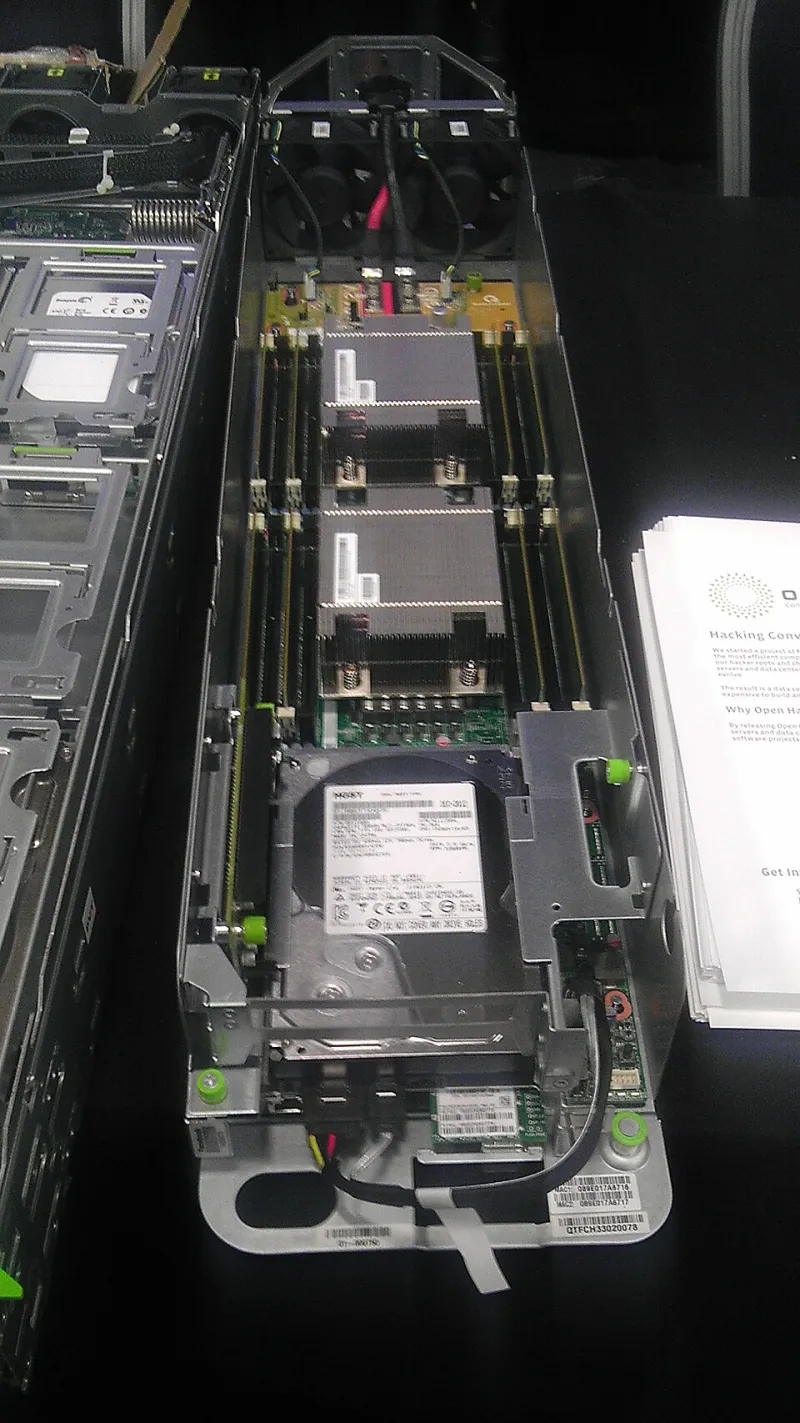
Photo: Robert.Harker, CC BY-SA 3.0, via Wikimedia Commons
There is a particular kind of organizational blindness that afflicts mid-market businesses when it comes to data center infrastructure. It is not negligence in the traditional sense. IT teams are often competent, well-intentioned, and genuinely overextended. The problem is one of prioritization — and nowhere is that misalignment more dangerous than in the management of thermal environments inside server rooms and colocation spaces.
Cooling infrastructure rarely generates the kind of urgency that a downed network switch or a ransomware alert produces. It operates quietly in the background, doing its job until, one day, it does not. By the time the consequences become visible — failed drives, degraded CPUs, unexplained system crashes — the damage has frequently been accumulating for months or even years.
For mid-market organizations operating with lean IT budgets and limited redundancy, the financial exposure from a preventable thermal event can be devastating.
The Invisible Accumulation of Heat Damage
Hardware manufacturers publish thermal operating specifications for a reason. Enterprise-grade servers, storage arrays, and networking equipment are engineered to function within defined temperature and humidity ranges. When ambient conditions inside a server room drift outside those parameters — even intermittently — the consequences are not always immediate or obvious.
Thermal stress degrades semiconductor components gradually. Capacitors age faster under elevated temperatures. Solder joints weaken through repeated thermal cycling. Hard disk drives, particularly spinning-platter models still common in mid-market environments, experience accelerated bearing wear and increased read/write error rates as temperatures climb. Solid-state drives are not immune either; sustained heat affects NAND flash endurance in ways that are difficult to detect until failure is imminent.
The industry standard reference point, often cited by hardware engineers, is the Arrhenius equation as applied to electronics reliability: for every 10 degrees Celsius rise in operating temperature above the rated threshold, the failure rate of many semiconductor components effectively doubles. That is not a theoretical abstraction. It translates directly into shortened equipment lifespans, unexpected outages, and procurement cycles that arrive years ahead of schedule.
Why Mid-Market Organizations Are Disproportionately Exposed
Enterprise-scale data centers — the hyperscale facilities operated by major cloud providers and Fortune 500 companies — invest heavily in precision cooling systems, redundant CRAC units, hot aisle and cold aisle containment, and continuous environmental monitoring. They treat thermal management as a first-class infrastructure discipline.
Mid-market organizations, by contrast, frequently inherit or retrofit server rooms that were never purpose-built for the density of equipment they now house. A converted storage closet or a corner of an office suite that served adequately a decade ago may now be absorbing heat loads it was never designed to handle. Expansion happens organically — a new rack here, additional storage there — without a corresponding reassessment of cooling capacity.
Budget constraints compound the problem. When capital expenditure decisions are made, cooling upgrades compete with more visible priorities: new endpoints, software licensing renewals, security tooling. A CRAC unit that is still technically operational rarely generates the same urgency as a server that has stopped responding.
The result is a population of mid-market server environments running hotter than their operators realize, monitored inadequately or not at all, and staffed by IT generalists who may lack the specialized knowledge to identify thermal risk before it becomes thermal failure.
Case Patterns: What Failure Actually Looks Like
The scenarios that emerge from conversations with IT procurement professionals and managed service providers paint a consistent picture.
In one representative case, a regional professional services firm operating a 12-rack on-premises environment experienced a cascade of storage failures over an 18-month period. Each failure was addressed individually — drives replaced, warranties claimed, vendors contacted. It was not until an MSP was engaged to conduct a full infrastructure audit that the underlying cause became clear: the server room's primary cooling unit had been operating at reduced capacity for over a year following a refrigerant leak that had never been properly remediated. Ambient temperatures in the room were regularly spiking above 85 degrees Fahrenheit during peak load periods. The total cost of hardware replacement, emergency procurement, and data recovery services exceeded $175,000. A properly maintained cooling system and basic environmental monitoring would have cost a fraction of that figure.
In another pattern frequently cited by IT consultants, organizations discover cooling deficiencies only after relocating equipment or conducting a post-incident review. The warning signs — elevated inlet temperatures on server management interfaces, increased fan speeds, thermal throttling events logged in system diagnostics — were present but unreviewed. Many mid-market environments lack the staffing bandwidth to parse IPMI logs or review integrated management controller data on a routine basis.
The Monitoring Gap
Perhaps the most actionable finding to emerge from an examination of mid-market cooling failures is the near-universal absence of dedicated environmental monitoring. Temperature and humidity sensors, rack-mounted or room-level, are relatively inexpensive. Platforms that aggregate environmental data alongside network and server performance metrics are widely available, including several with pricing tiers designed for organizations outside the enterprise segment.
Yet deployment rates remain low. A 2023 survey conducted by a managed infrastructure services organization found that fewer than 40 percent of mid-market companies with on-premises server infrastructure had implemented any form of automated thermal alerting. The majority relied on periodic manual checks or, more commonly, on hardware failure events themselves as the de facto monitoring mechanism.
This represents a procurement and policy failure as much as a technical one. Organizations that invest in server hardware, storage systems, and networking equipment without simultaneously investing in the environmental safeguards that protect that hardware are, in effect, self-insuring against a risk they have not properly quantified.
A Framework for Corrective Action
Addressing thermal risk in mid-market environments does not require a wholesale infrastructure overhaul. It requires a structured, prioritized approach.
Environmental baseline assessment. Before any remediation can be planned, organizations need accurate data on current conditions. This means deploying calibrated temperature and humidity sensors at multiple points within the server environment — at rack inlet and outlet positions, at floor level, and near any identified hot spots. Baseline readings should be collected across multiple operational periods, including peak load conditions.
Cooling capacity audit. Existing cooling equipment should be evaluated against current heat load requirements. This includes assessing the BTU output of all CRAC and supplemental cooling units, verifying refrigerant levels and system health, and calculating whether installed capacity is adequate for the current rack density. Where gaps exist, supplemental in-row cooling or precision air conditioning units may be warranted.
Airflow management. Many thermal problems in mid-market environments are exacerbated by poor airflow discipline. Blanking panels missing from empty rack units, cables obstructing airflow paths, and the absence of hot aisle and cold aisle separation all contribute to heat recirculation. These are low-cost, high-impact corrections that should be addressed before more expensive equipment upgrades are considered.
Continuous monitoring and alerting. Environmental data has no value if it is not acted upon. Organizations should implement automated alerting that notifies IT staff when temperature or humidity thresholds are exceeded, and those alerts should be integrated into existing incident response workflows.
Maintenance scheduling. Cooling equipment requires regular preventive maintenance — filter replacements, coil cleaning, refrigerant checks, belt inspections where applicable. This maintenance should be calendared and treated with the same operational seriousness as server patching or backup verification.
The Procurement Dimension
For IT procurement professionals, the thermal issue carries a direct financial implication that extends beyond the immediate cost of cooling equipment. Hardware replacement timelines, depreciation schedules, and total cost of ownership calculations are all predicated on equipment operating within its rated environmental conditions. When those conditions are not maintained, the assumptions underlying procurement planning become unreliable.
Organizations that fail to account for thermal management in their infrastructure budgets are, in practice, accepting a hidden liability. The cost of proactive cooling investment — sensors, maintenance contracts, capacity upgrades — is measurable and manageable. The cost of the failures that inadequate cooling produces is neither.
The server room that is too warm today is not a background concern. It is a procurement crisis in formation. The organizations that recognize this distinction before equipment begins to fail will spend significantly less than those that learn it afterward.