Dead Ends and Live Threats: The Unmanaged USB Devices Quietly Compromising Enterprise Security
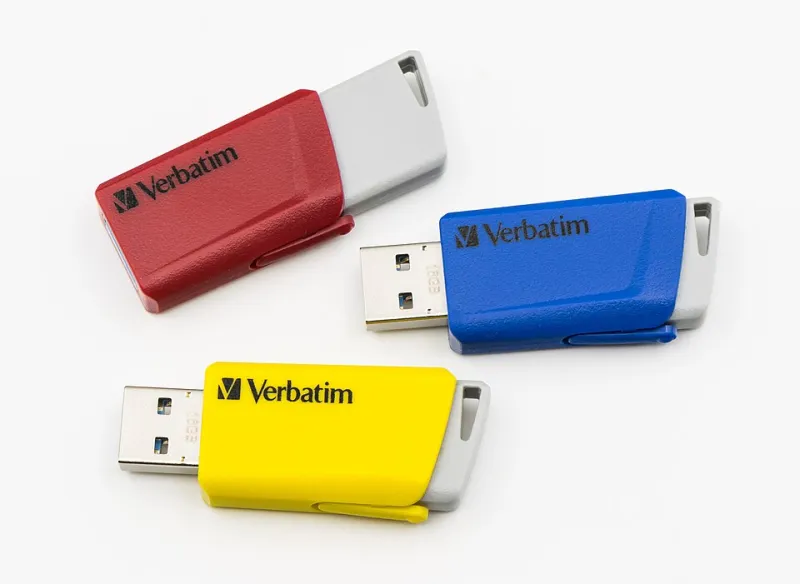
Photo: Jacek Halicki, CC BY-SA 4.0, via Wikimedia Commons
Ask any enterprise IT security director to map every USB device that has touched a company machine in the past twelve months, and the silence that follows will be telling. Not because the question is unreasonable, but because the honest answer—in most organizations—is that no one actually knows.
USB peripherals occupy a peculiar blind spot in corporate security infrastructure. They are cheap enough to be treated as disposable, small enough to disappear into jacket pockets and desk clutter, and ubiquitous enough that flagging every one of them feels impractical. Yet that casual attitude toward a category of hardware that connects directly to endpoint systems has created a vulnerability landscape that security professionals are only beginning to reckon with fully.
The Scale of the Problem Is Larger Than Most Realize
In large enterprises, the sheer volume of USB-connected devices in circulation at any given time is staggering. Beyond the obvious flash drives, the category includes hardware authentication dongles for legacy software licenses, external hard drives used for ad hoc backups, presentation clickers, USB-connected headsets, and a long tail of adapters and hubs that have accumulated over years of hardware refreshes and employee turnover.
Many of these devices were provisioned under IT oversight at some point. But tracking them through reassignments, remote work transitions, office relocations, and employee departures is a different matter entirely. A 2023 survey by the Ponemon Institute found that a significant percentage of data breach incidents involving physical media traced back to devices that had formally exited IT asset inventories but remained physically present and occasionally active within corporate environments.
The problem compounds when organizations factor in personally owned devices. Employees routinely connect personal flash drives to work machines for what seem like harmless purposes—transferring a presentation file, charging a device, pulling a personal document. Each of those connections represents a potential ingress point for malware, and a potential egress point for sensitive corporate data.
Why USB Threats Remain Underestimated
Part of the challenge is perception. Enterprise cybersecurity investment has followed the money and the headlines—cloud misconfigurations, ransomware delivered via phishing campaigns, and API vulnerabilities dominate boardroom conversations and vendor pitches alike. USB-based attack vectors feel almost retro by comparison, which may be precisely why adversaries continue to exploit them.
The Stuxnet incident, now well over a decade old, demonstrated that air-gapped industrial systems could be compromised via infected USB media. More recently, the FBI has issued warnings about threat actors mailing malicious USB devices to corporate targets under the guise of promotional materials or software updates—a technique that exploits both human curiosity and the inherent trust employees extend to physical objects.
BadUSB-style attacks, in which a device's firmware is reprogrammed to impersonate a keyboard or network adapter rather than a storage device, present a particularly difficult challenge. Conventional endpoint security tools that scan file contents have no mechanism to detect a device behaving as a malicious human interface device at the hardware level. The attack surface, in other words, extends below the operating system layer.
The Asset Visibility Gap
For IT procurement and asset management teams, USB peripherals represent a category that has historically fallen through the cracks of formal lifecycle management. High-value hardware—servers, workstations, networking equipment—carries asset tags, serial number records, and defined refresh schedules. A $12 flash drive purchased in bulk for a trade show, or a dongle bundled with a software license three years ago, rarely receives the same treatment.
This creates what security professionals sometimes call "shadow inventory": devices that exist within the corporate environment but outside any managed record. Shadow inventory is not merely an administrative inconvenience. It means that when a security incident occurs involving a USB device, forensic investigation is complicated or impossible because the chain of custody was never established.
Enterprise endpoint detection and response (EDR) platforms do log USB connection events on managed machines, and that telemetry is valuable. But log data is only actionable when someone is actively monitoring it and when the device in question connects to a managed endpoint. Devices that connect to unmanaged machines, or that are never plugged in again after an initial data transfer, leave no retrievable trail.
Practical Strategies for Reclaiming Control
Regaining visibility over USB device populations does not require a complete operational overhaul, but it does require deliberate policy and tooling investment across several dimensions.
Establish and enforce a USB device registration policy. Any USB peripheral intended for use on corporate systems should be logged at the time of provisioning with a unique identifier, assigned user, and intended purpose. This applies to devices purchased through IT procurement channels as well as those bundled with licensed software. Devices that cannot be traced to a registered record should be treated as unauthorized by default.
Deploy device control software at the endpoint level. Solutions such as Microsoft Intune, Symantec Endpoint Security, and purpose-built tools like Ivanti Device Control allow administrators to define granular policies governing which device classes—and in some cases which specific device identifiers—are permitted to connect to managed endpoints. Blanket USB port disablement is rarely practical, but allowlisting known, registered devices is achievable in most enterprise environments.
Conduct periodic physical audits of peripheral inventory. Asset audits for high-value hardware are standard practice. Extending a lightweight version of that discipline to USB peripherals—particularly in high-security departments handling financial data, intellectual property, or regulated personal information—can surface forgotten devices before they become incident reports.
Address firmware update hygiene for USB devices. Firmware vulnerabilities in USB storage devices and hubs are real and exploitable, but they receive a fraction of the patching attention directed at servers and workstations. IT teams should identify which USB devices in their environment support firmware updates and establish a process for applying them, particularly for devices used in sensitive contexts.
Train employees on the specific risks of USB devices. Security awareness programs frequently address phishing and password hygiene while giving minimal attention to physical media. Employees should understand why connecting an unknown USB device—regardless of where it was found or how it was received—represents a genuine threat, not a theoretical one.
The Cost of Continued Inaction
The argument for deprioritizing USB security has always been one of resource allocation: limited security budgets should chase the highest-probability threats. That logic has some merit, but it ignores the asymmetry of the risk. A single compromised USB device connected to the right endpoint can initiate a lateral movement chain that renders the entire network vulnerable. The entry cost for the attacker is negligible; the recovery cost for the organization can be catastrophic.
Enterprise IT teams that have invested heavily in perimeter defense, cloud security posture management, and zero-trust network architecture sometimes discover, to their considerable frustration, that the incident that finally makes headlines originated from a flash drive someone found in a parking garage. The attack surface does not respect the sophistication of the defenses built elsewhere.
Managing USB device risk is not glamorous work. It does not generate the kind of vendor attention or conference panel discussions that cloud security commands. But for IT and security leaders serious about closing the gaps in their defensive posture, the peripheral ecosystem is one of the most consequential places to start.