Faster Pipes, Same Bottleneck: Why Network Upgrades Alone Won't Solve Your Organization's Performance Problem
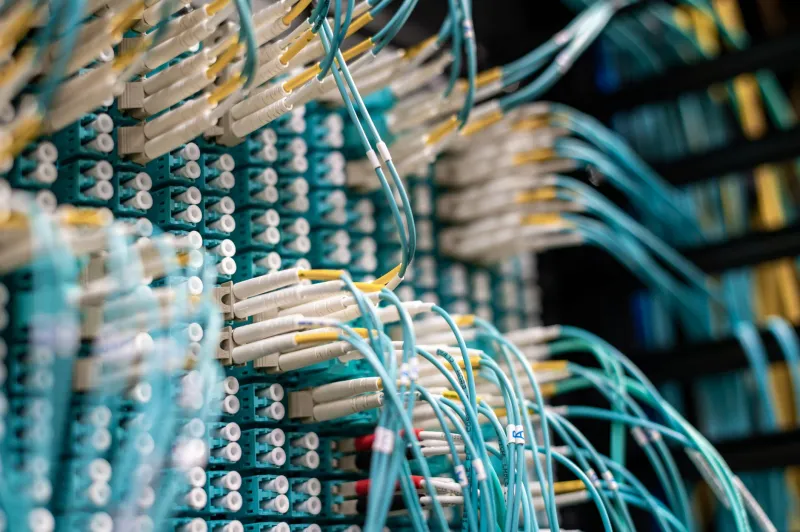
The sequence is familiar to anyone who has managed IT infrastructure for a growing organization. Users complain about slow performance. Productivity metrics soften. The IT team investigates and finds that network utilization is high. Leadership approves a bandwidth upgrade — sometimes a substantial one. The upgrade is completed. Users continue to complain about slow performance.
This outcome is common enough that it deserves serious analytical attention, because the instinct that drives the upgrade decision — that more bandwidth equals better performance — is not wrong in principle. It is simply incomplete. Bandwidth is one variable in a complex performance equation, and organizations that treat it as the dominant variable frequently discover, after a significant capital expenditure, that they have solved the wrong problem.
Why the Bandwidth Diagnosis Feels Correct
Network utilization data is among the most visible and easily quantified metrics available to IT teams. When bandwidth consumption is running at 80 or 90 percent of capacity, the inference that capacity is the constraint is intuitive and defensible. It is also frequently misleading.
High utilization is a symptom. It is not, by itself, a diagnosis. The underlying causes of high utilization are numerous and varied, and only some of them are resolved by increasing available capacity. In many cases, high bandwidth consumption reflects inefficiencies in how applications are configured, how endpoints communicate with servers and cloud services, or how user behavior interacts with network architecture — inefficiencies that persist regardless of how much additional capacity is added.
The result is what network engineers sometimes call "induced demand": new capacity that fills quickly because the underlying conditions driving consumption have not changed. The organization has a faster network that is just as congested as the slower one it replaced.
The Endpoint Configuration Problem
One of the most consistently underexamined contributors to network performance issues in mid-market environments is endpoint configuration. Workstations, laptops, and mobile devices that are not properly configured for the network environment in which they operate can generate disproportionate amounts of inefficient traffic — redundant requests, failed connections that retry automatically, background synchronization processes running on suboptimal schedules, and application behaviors that assume network conditions very different from those that actually exist.
In organizations that have transitioned significant portions of their workforce to remote or hybrid work arrangements, this problem is frequently acute. Devices configured for on-premises network environments often behave inefficiently when operating through VPN connections or directly over residential internet connections. The additional latency introduced by these configurations can make even high-bandwidth connections feel sluggish, because the constraint is not throughput — it is round-trip time and connection overhead.
Diagnosing endpoint configuration issues requires more granular visibility than most organizations currently maintain. Network monitoring tools that capture application-layer traffic data — rather than simply measuring aggregate bandwidth consumption — can identify specific devices or applications that are generating disproportionate traffic volumes or exhibiting connection patterns indicative of misconfiguration.
Legacy Software and the Latency Tax
A second category of invisible bottleneck involves legacy software — applications that were designed for network architectures that no longer reflect how organizations actually operate. Many enterprise applications built in the early 2000s, and some from as recently as the early 2010s, assume low-latency, high-reliability local area network connections. When these applications are accessed over WAN connections, cloud infrastructure, or VPN tunnels, their architectural assumptions produce performance characteristics that no amount of bandwidth can fully compensate for.
The symptom is typically described by users as "the application is slow," which IT teams reasonably interpret as a network problem. The actual cause is that the application is making dozens or hundreds of sequential, synchronous requests to a server — a pattern that performs acceptably on a 1ms LAN connection and unacceptably on a 40ms WAN connection, regardless of the available bandwidth on either link.
This is a software problem, not a network problem. Resolving it requires either application modernization — replacing or upgrading the legacy system with one designed for contemporary network architectures — or application delivery optimization, using technologies such as WAN optimization appliances or application delivery controllers that can cache, compress, and streamline the communication patterns of legacy applications. Neither solution involves purchasing additional bandwidth.
User Behavior as a Network Variable
Organizations frequently underestimate the degree to which user behavior shapes network performance outcomes. The adoption of video conferencing as a default communication mode — a shift that accelerated dramatically during the pandemic years and has not substantially reversed — has permanently altered the bandwidth consumption profile of most corporate networks. A single high-definition video call consumes bandwidth that would have been considered significant enterprise capacity a decade ago. Dozens of simultaneous calls can saturate connections that appear more than adequate on paper.
But the solution is not always more bandwidth. It is frequently smarter traffic management. Quality of service (QoS) configurations that prioritize real-time communications traffic over background processes can dramatically improve the perceived performance of video conferencing and VoIP without adding a single megabit of capacity. Organizations that have not implemented or recently reviewed their QoS policies are frequently operating networks that treat a critical video call and a background software update as equivalent traffic — with predictable consequences for call quality.
Similarly, the timing and configuration of endpoint management activities — software updates, antivirus scans, backup processes — has a measurable impact on network performance during business hours. Scheduling these activities for off-peak hours, and configuring them to consume bandwidth within defined limits, is a basic optimization that many mid-market environments have not implemented.
A Diagnostic Framework Before the Next Capital Request
For IT teams facing pressure to upgrade network infrastructure in response to performance complaints, a structured diagnostic process can prevent the disappointment of a costly upgrade that fails to resolve the underlying problem.
The diagnostic should begin with application-layer traffic analysis to identify which applications are consuming the most bandwidth, and whether their consumption patterns reflect normal operation or misconfiguration. It should include latency measurement — not just throughput — because many performance complaints that feel like bandwidth problems are actually latency problems that bandwidth increases cannot address.
Endpoint audit should be included: reviewing the network configuration of a representative sample of devices to identify inconsistencies, outdated drivers, or misconfigured proxy settings that may be generating inefficient traffic. QoS policy review should assess whether existing traffic prioritization rules reflect current application usage patterns. And a user behavior assessment — through survey or direct observation — can identify practices, such as leaving video calls running in the background or streaming high-definition content during work hours, that are contributing to consumption patterns.
This diagnostic process is not glamorous. It does not result in a ribbon-cutting moment or a press release about infrastructure investment. But it frequently identifies actionable optimizations that improve real-world performance without the capital expenditure of a network upgrade — and in cases where a genuine bandwidth constraint does exist, it produces the evidence base needed to make that investment with confidence rather than optimism.
The Constraint Is Rarely Where You Think It Is
Network performance is a systems problem, and systems problems resist single-variable solutions. Organizations that have invested in bandwidth upgrades and found themselves disappointed should resist the temptation to simply invest in more bandwidth. The constraint that is limiting productivity is still present. Finding it requires looking beyond the utilization graphs and into the layers of configuration, application architecture, and user behavior that determine what the network is actually being asked to do — and how well it is equipped to do it.